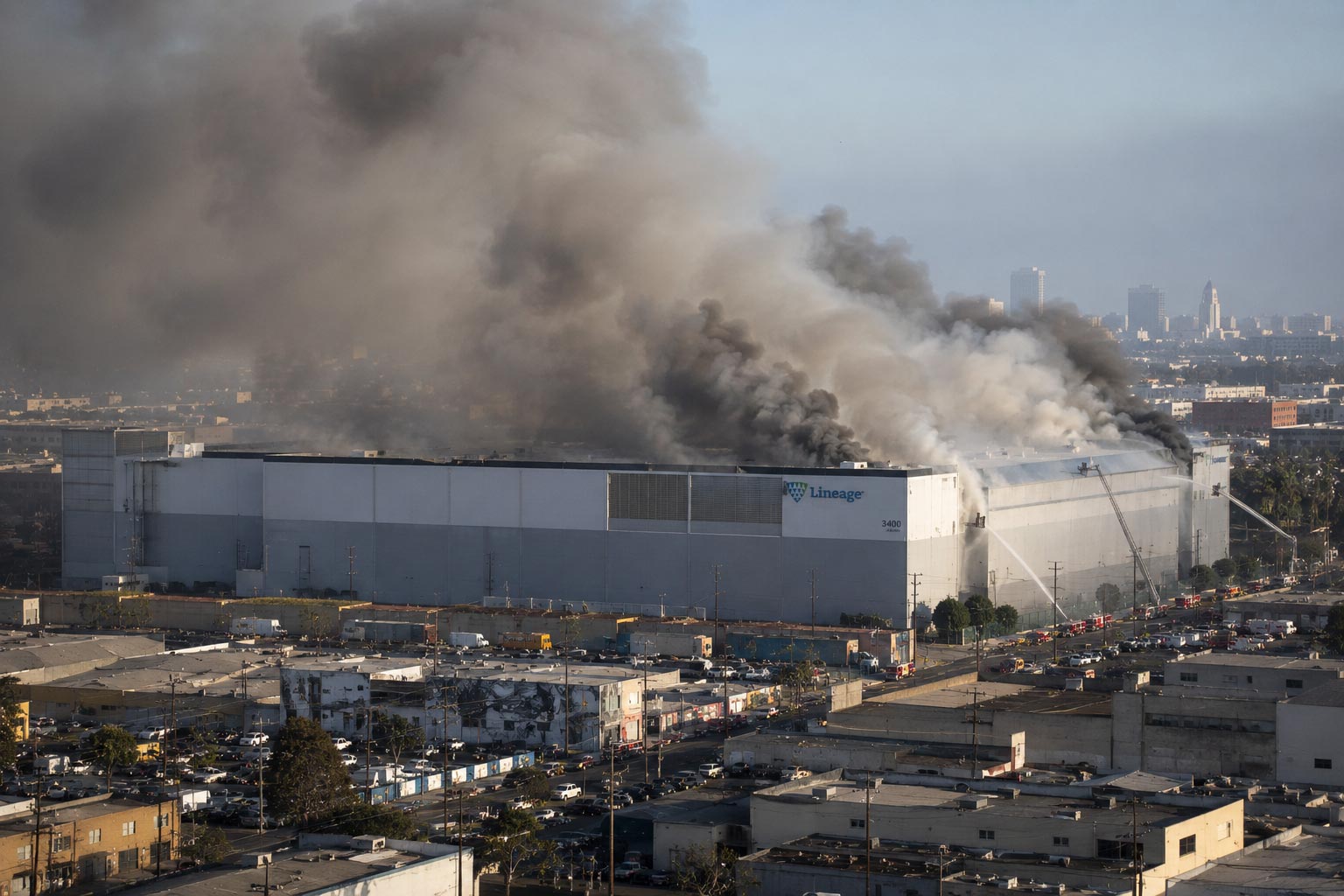
The massive warehouse fire in Boyle Heights has become a reminder that major fire events do not end when the flames are under control. For nearby residents, businesses, property owners, and facility managers, the impact can continue for days, weeks, or even longer through smoke exposure, soot, odor, contaminated debris, compromised HVAC systems, and complex environmental cleanup.
The fire began on June 17, 2026, at a large cold storage facility near downtown Los Angeles. The building, operated by Lineage and known as the Big Bear facility, has been reported as a roughly 500,000 square foot warehouse used to store frozen food products including seafood, pork, beef, and poultry. According to public reports, approximately 85 million pounds of frozen food were inside the building when the fire broke out.
What has made this incident especially difficult is the type of facility involved. Cold storage warehouses are not ordinary commercial buildings. They are heavily insulated to maintain low temperatures and preserve stored goods. That insulation can make it harder for firefighters to ventilate the structure, release smoke and heat, and safely reach the source of the fire. In Boyle Heights, fire officials have also had to contend with a compromised roof, rooftop solar panels, tall steel rack systems, dense storage conditions, and limited interior access.
As a result, the fire has continued to smolder, sending smoke into surrounding neighborhoods and raising questions about air quality, public health, and the eventual cleanup of the site.
Why Cold Storage Fires Are So Difficult
In a typical warehouse fire, firefighters may be able to open the roof, ventilate smoke, enter portions of the structure, and attack the fire from inside. Cold storage facilities often complicate that approach. Their walls, ceilings, and roof systems are designed to keep cold air in and outside air out. When a fire starts inside or spreads through the roof and insulation, that same construction can trap heat, smoke, and gases.
The contents of the building can also intensify the problem. A large frozen food warehouse may contain pallets, cardboard, plastic wrap, packaging materials, insulation, refrigeration systems, electrical systems, batteries, solar equipment, and millions of pounds of food products. Once those materials burn, smolder, melt, or spoil, the incident shifts from a fire suppression challenge to a much broader environmental response.
That is why these events can require more than fire crews. Once the active emergency is controlled, the recovery may involve environmental remediation specialists, hazardous materials teams, demolition contractors, indoor air quality professionals, HVAC cleaning crews, waste disposal partners, and public health agencies.
The Health Concerns: Smoke, Soot, Ash, and Fine Particles
For nearby communities, the most immediate concern is smoke. Smoke from a large commercial fire can contain fine particles, gases, soot, and residues from whatever materials are burning. Even when the exact composition of the smoke is still being evaluated, health officials generally treat visible smoke and ash as a serious exposure concern.
One of the key pollutants associated with major fire events is PM2.5. These are fine particles small enough to travel deep into the lungs. Exposure can irritate the eyes, nose, throat, and lungs. For some people, that may cause coughing, headaches, watery eyes, sore throat, chest tightness, shortness of breath, or worsening asthma symptoms.
The risk is higher for children, older adults, pregnant people, outdoor workers, and anyone with asthma, COPD, heart disease, or other respiratory conditions. People who must work outside near smoke or ash may also face increased exposure, especially if they are performing cleanup, security, transportation, construction, maintenance, or warehouse operations nearby.
During events like the Boyle Heights fire, residents and businesses should continue following guidance from local public health and air quality agencies. If smoke or ash is present, people should remain indoors when possible, keep windows and doors closed, avoid strenuous outdoor activity, use air filtration when available, and wear a properly fitted N95 or P100 mask if they must be outside in smoky conditions.
How Smoke and Soot Affect Buildings
The visible smoke plume is only part of the problem. Smoke can move into buildings through doors, windows, vents, loading docks, rooftop units, make-up air systems, and HVAC intakes. Once inside, smoke can leave behind odor, soot, and fine residue on surfaces and inside mechanical systems.
For businesses and property owners near a major fire, the questions often begin after the smoke starts to clear. Did smoke enter the building? Did soot settle on work surfaces, inventory, equipment, or furniture? Did the HVAC system pull contaminated air into ducts, filters, coils, or occupied spaces? Are odors lingering in offices, schools, clinics, retail spaces, warehouses, restaurants, or multi-family buildings?
These are not always questions that can be answered by appearance alone. A building may look clean while still holding odor or fine residue in air handling systems or porous materials. In some cases, routine janitorial cleaning is not enough. Smoke and soot cleanup may require containment, specialized cleaning methods, filter replacement, duct cleaning, odor control, and indoor air quality evaluation.
This is where Alliance Environmental Group can help.
Alliance provides environmental remediation and indoor air quality services for commercial, industrial, institutional, and residential clients. In the aftermath of a major fire event, Alliance can assist property owners, facility managers, schools, healthcare facilities, property management companies, and businesses with assessing affected areas, addressing smoke and soot residues, cleaning HVAC systems, removing impacted materials, and helping restore safer indoor conditions.
The Cleanup Challenge After a Cold Storage Fire
The Boyle Heights fire also presents a significant cleanup issue because of the amount and type of material inside the facility. Millions of pounds of frozen food can quickly become a biohazard concern once refrigeration is lost, products thaw, packaging is damaged, and organic materials begin to spoil.
Spoiled food at this scale can create odor, bacteria growth, pest attraction, contaminated runoff, and unsafe working conditions. Add fire debris, insulation, packaging, smoke residue, water from firefighting operations, damaged structural components, and possible hazardous materials concerns, and the cleanup becomes highly specialized.
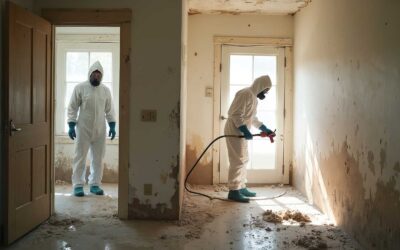
A site like this may require a phased recovery plan. The first step is usually securing the area and determining what hazards remain. From there, the work may include removing damaged contents, managing odor, controlling dust and airborne particles, cleaning or replacing affected HVAC components, demolishing unsafe materials, separating waste streams, coordinating disposal, and preparing the property for restoration or redevelopment.
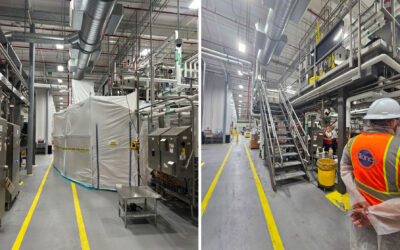
Alliance Environmental Group’s services align closely with the kinds of needs that can follow a large-scale warehouse fire. These may include environmental remediation, biohazard remediation, HVAC system and duct cleaning, indoor air quality support, contents removal, insulation removal, demolition and site clearing, odor control, infection control practices, and coordination with property owners and project stakeholders.
For nearby properties, the response may be more targeted but still important. A business several blocks away may not need demolition or major remediation, but it may need inspection of rooftop units, replacement of filters, cleaning of soot-affected surfaces, duct system evaluation, odor control, or documentation of smoke-related impacts. A school, clinic, office, retail store, or multi-family property may need to confirm that indoor spaces are safe and comfortable before normal operations continue.
Why HVAC Systems Deserve Special Attention
One of the most overlooked issues after a major smoke event is the HVAC system. Air handling systems are designed to move air through a building. During a smoke event, that can become a problem if outside air or contaminated indoor air is pulled through ducts, filters, coils, fans, and vents.
Even after the outdoor air improves, residues may remain inside the system. Odors may continue circulating. Filters may become overloaded. Dust and soot may settle in ductwork or around vents. In commercial buildings, this can affect employees, tenants, customers, patients, students, and visitors.
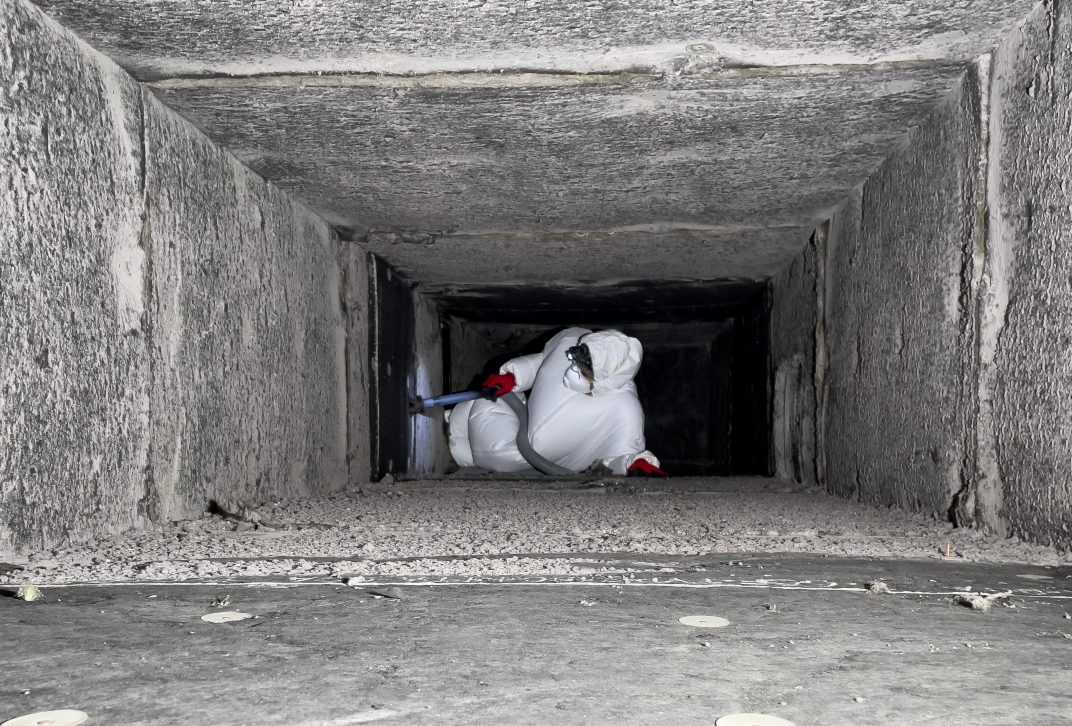
Alliance’s HVAC system and duct cleaning services can help property owners determine whether smoke, soot, debris, or odor has affected the system. This can be especially important for buildings that house sensitive populations or operations, including healthcare facilities, schools, senior living properties, food service businesses, laboratories, clean commercial spaces, and high-traffic public buildings.
When the concern is air quality, the building’s mechanical system should not be treated as an afterthought. It is often one of the most important places to inspect.
What Businesses and Property Managers Should Do After a Nearby Fire
Any business or property manager affected by smoke, ash, or odor should begin with a practical review of the building. The goal is to determine whether the fire impacted the interior environment or building systems.
Signs that professional evaluation may be needed include lingering smoke odor, visible ash or soot, employee or tenant complaints, dirty supply or return vents, rooftop units exposed to smoke, discolored filters, smoke intrusion through doors or loading areas, contaminated inventory, or concerns about air quality after reopening.
It is also important to document conditions. Photos, notes, maintenance records, filter changes, odor complaints, and cleaning steps can all be useful when coordinating with building owners, tenants, insurers, public agencies, or remediation professionals.
Alliance can support this process by helping identify affected areas, recommend appropriate cleanup steps, and perform environmental services that go beyond basic cleaning. For commercial and industrial properties, having an experienced remediation partner can help reduce downtime, protect occupants, and support a more organized recovery.
The Bigger Lesson From Boyle Heights
The Boyle Heights warehouse fire is not only a local emergency. It is a case study in what can happen when a large industrial fire intersects with dense neighborhoods, commercial operations, cold storage construction, rooftop solar systems, complex building contents, and public health concerns.
For the community, the most urgent concern is health and safety. Residents need clear information, clean air, and protection from smoke and ash exposure. Businesses need to know whether it is safe to operate. Property owners need to understand whether their buildings have been affected. Agencies and cleanup teams need to manage the debris, odor, spoiled materials, and environmental risks left behind.
Major fires create visible damage, but they also create hidden impacts. Smoke travels. Soot settles. Odors linger. HVAC systems can become contaminated. Organic materials can spoil. Debris can become hazardous. Recovery requires experience, planning, and the right environmental controls.
Alliance Environmental Group helps bridge the gap between emergency response and safe recovery. With services that include environmental remediation, indoor air quality support, HVAC system and duct cleaning, biohazard remediation, contents removal, insulation removal, and demolition and site clearing, Alliance is equipped to help property owners and facility managers respond to the complex aftermath of large fire and smoke events.
For businesses, schools, healthcare facilities, property managers, and building owners affected by smoke, soot, odor, debris, or air quality concerns from the Boyle Heights warehouse fire or similar incidents, Alliance Environmental Group can help assess the situation and provide the professional remediation services needed to move forward safely.
The fire may eventually be extinguished, but the recovery work will continue. For communities and businesses near large-scale fire events, what happens next is just as important as what happened during the fire.