When most people hear the term Infection Control Risk Assessment, or ICRA, they think of hospitals, patient-care environments, and healthcare construction projects. In Las Vegas, however, the Alliance Environmental Group team recently adapted the same containment principles for a very different setting: an active food manufacturing plant.
The facility needed to perform welding and maintenance within a production line, but shutting down operations was not the preferred option. That created a complex challenge. Contractors needed enough access to complete the work, while the facility needed to protect nearby food-contact surfaces and prevent welding smoke, metal fumes, grinding dust, and metal shavings from entering the surrounding production area.
The solution was a purpose-built hot-work containment system designed around the conditions of the operating facility.
Adapting Healthcare Containment for Manufacturing
ICRA containment systems are commonly used in hospitals to isolate construction or maintenance activity from occupied clinical areas. The goal is to control airborne particles, protect sensitive environments, and reduce the possibility of contaminants moving beyond the work zone.
For this Las Vegas project, Alliance applied those same principles to a manufacturing environment.
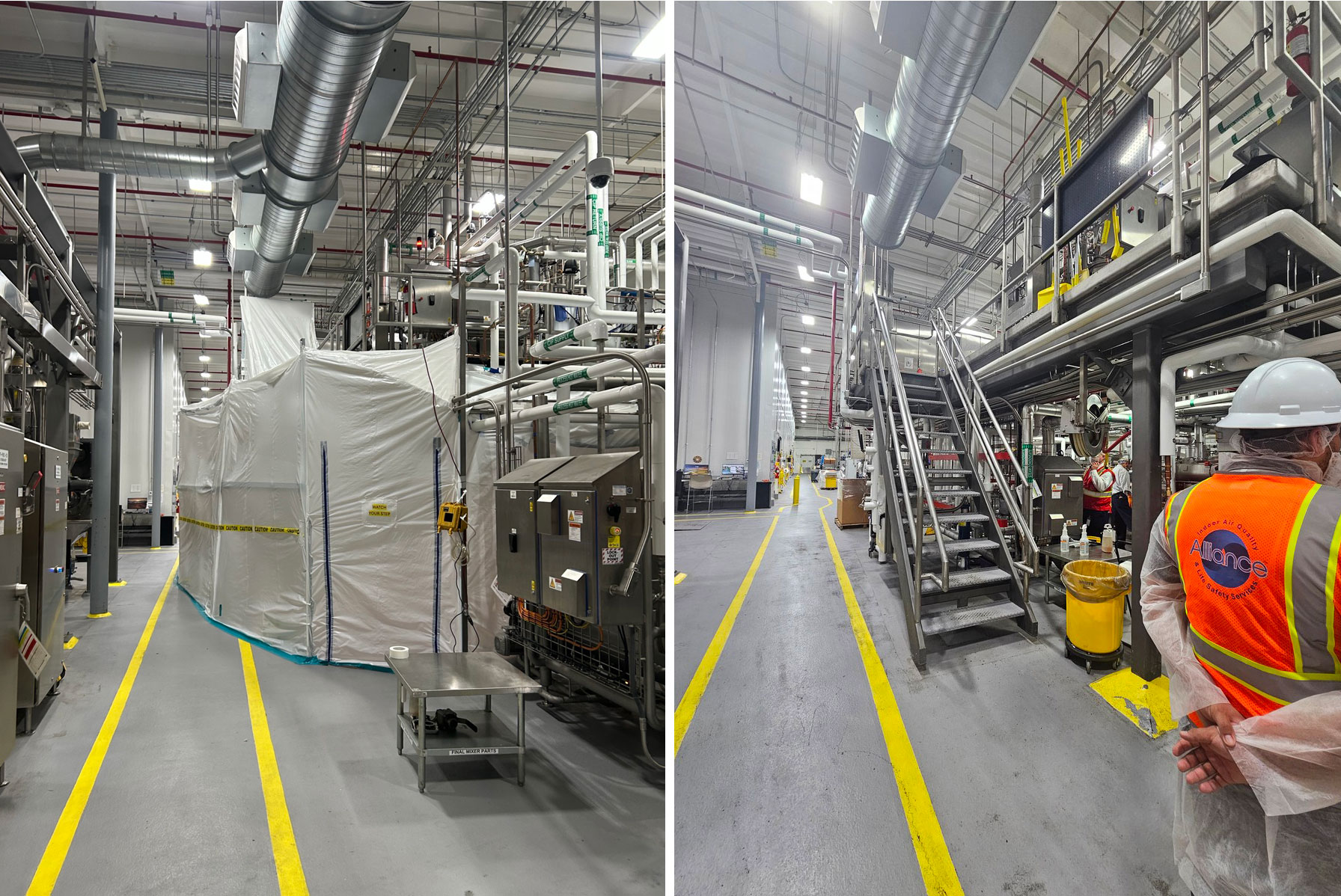
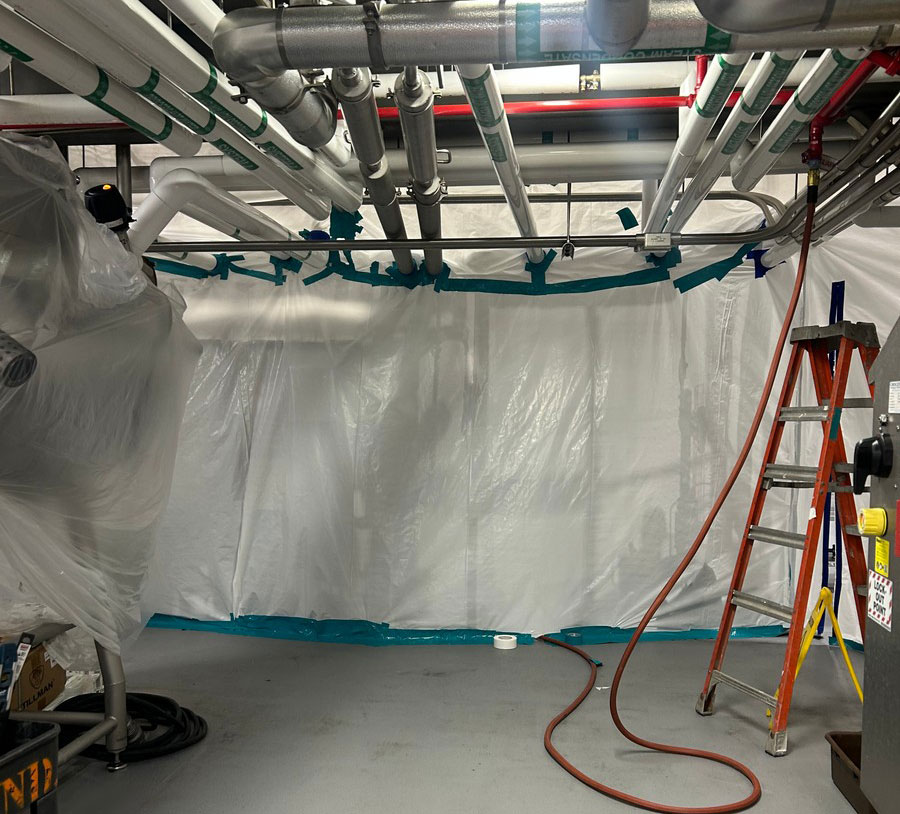
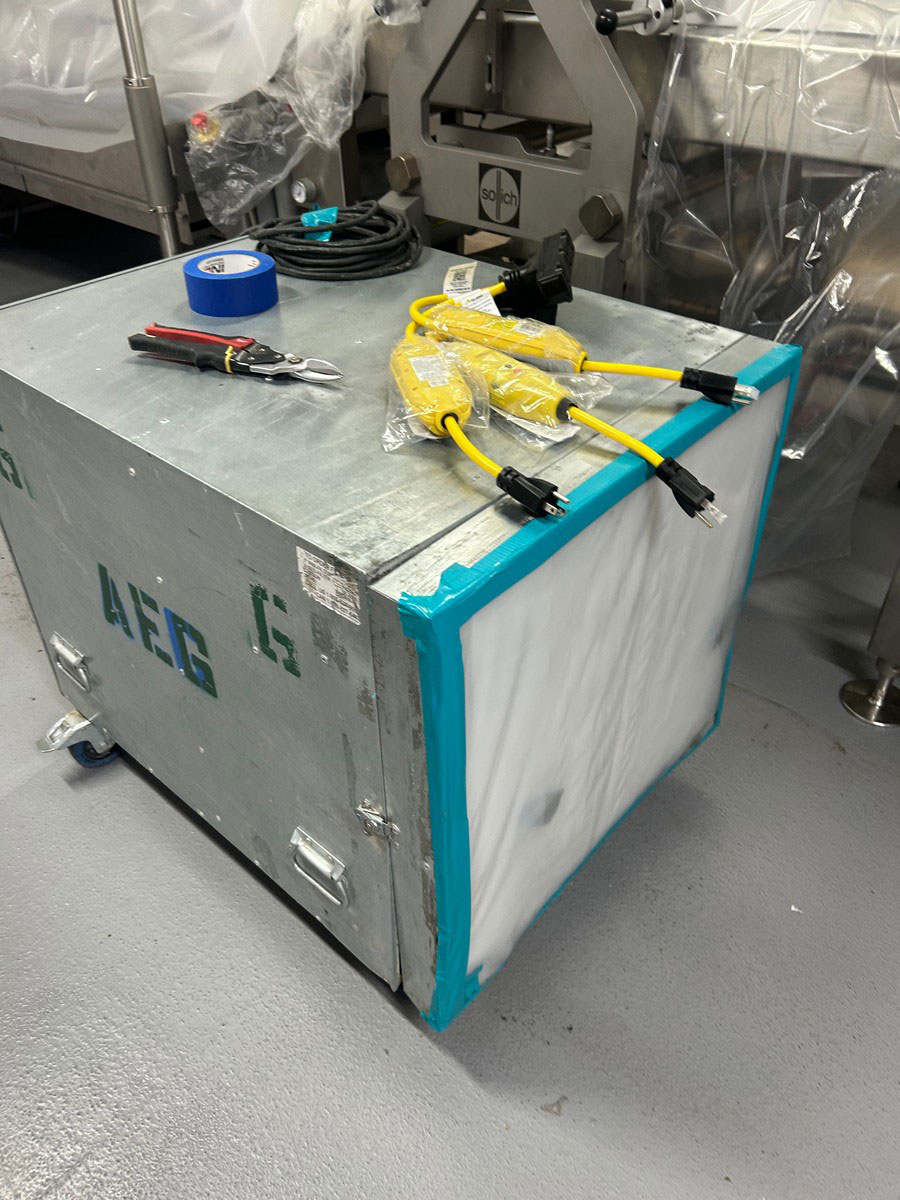
The team installed sealed barriers around the work area, established HEPA-filtered negative air, and created controlled access points for the contractors performing the welding. Together, these measures helped contain the work and separate it from the active production space around it.
This approach allowed the maintenance team to complete the required work while the plant continued operating.
Why Hot Work Requires Careful Containment
Welding, grinding, and other forms of hot work can introduce several risks into an active food-production environment. Smoke and fumes can travel beyond the immediate work area. Grinding activity can create fine dust and metal fragments. Sparks and heat can also create fire-prevention concerns.
In a facility where nearby surfaces, equipment, or materials may be part of the production process, even a relatively small maintenance project can require careful planning.
A properly designed containment system can help address several priorities at once:
- Limit the movement of welding smoke and airborne particles
- Prevent metal shavings and grinding debris from reaching production areas
- Protect nearby food-contact surfaces
- Support fire-prevention procedures
- Maintain controlled access to the work zone
- Help the facility continue operating during maintenance
The project demonstrated how containment methods developed for one highly sensitive industry can be adapted to solve challenges in another.
Keeping Production Moving
One of the most important aspects of the project was maintaining operations.
For many manufacturing facilities, a shutdown can create significant scheduling, production, and financial consequences. At the same time, necessary repairs cannot always be postponed. The challenge is finding a way to complete the work without compromising the surrounding environment.
Alliance worked with the facility and contractors to create a contained work area that supported both objectives. The maintenance work could proceed, and the production line outside the containment remained separated from the activity taking place inside.
That balance required more than simply installing temporary walls. The containment needed to be sealed, appropriately ventilated, and organized around controlled entry and exit.
A Customized Environmental Solution
There is no single containment design that works for every project.
The correct setup depends on the type of work being performed, the surrounding environment, the sensitivity of nearby operations, access requirements, airflow, and the duration of the project.
For this manufacturing facility, Alliance used:
- Sealed temporary barriers
- HEPA-filtered negative-air equipment
- Controlled contractor access
- A containment layout customized to the production line
- Coordination around ongoing plant operations
The result was a practical solution built specifically for the conditions of the facility.
Modern Problems Require Flexible Thinking
This project is a strong example of how modern environmental challenges often require solutions that extend beyond traditional applications.
A system commonly associated with hospital construction became an effective tool for protecting an active food-manufacturing environment. By adapting proven containment practices to a new setting, the Alliance Las Vegas team helped the client complete important maintenance work while supporting continued production.
It also reflects a broader principle behind Alliance’s work: the best solution is not always the most conventional one. Sometimes it requires taking a proven method, understanding the underlying risk, and applying it in a new way.
Specialty Containment Support from Alliance
Alliance Environmental Group provides customized containment and environmental services for healthcare facilities, manufacturing plants, commercial properties, and other sensitive occupied environments.
Whether a project involves construction, welding, grinding, maintenance, or another activity that could introduce airborne contaminants or debris, Alliance can design a containment approach around the specific needs of the facility.
Need a customized containment solution for an active facility? Contact Alliance Environmental Group to discuss your project.