When construction work is scheduled at a property you manage, the focus quickly shifts to timelines, contractors, and coordination. But if asbestos-containing materials are present or suspected, one decision shapes the safety of every worker who follows: whether removal is handled properly or not.
For property managers, this is not a technical question reserved for specialists. It is an operational one. Poorly managed asbestos removal creates real risk for construction workers, introduces project instability, and places the burden of unclear responsibility squarely on oversight. Understanding how proper removal protects workers — and where your role fits in that process — is essential before any site work begins.
This article covers four topics to build that foundation: why this issue matters before construction starts, what “proper” removal means from a business perspective, how it directly affects worker safety, and what you should be evaluating at this stage of the process. If you are coordinating renovation, demolition, or pre-construction work at a Los Angeles property, these concepts apply directly to your planning conversations.
1. Why This Topic Matters Before Construction Work Begins
Asbestos becomes a construction-worker issue the moment a project disturbs materials that contain it. Renovation cuts, demolition activity, and even maintenance work on aging infrastructure can release fibers that are invisible, odorless, and harmful with repeated exposure. Workers who enter a site without knowing whether hazardous materials have been properly addressed face exposure risks that could have been controlled upstream.
The challenge for property managers is that this risk is not always visible. A building can look construction-ready while affected areas remain inadequately addressed. Without early awareness and disciplined planning, a project can move into active trade work while asbestos-related conditions are still unresolved.
This is why the conversation about proper removal must happen at the planning stage — not after contractors arrive. Early coordination between property management, the abatement provider, and follow-on trades determines who has access to which areas, when those areas are cleared for use, and how each party is informed of conditions before beginning work. Waiting to address these questions creates the exact gaps that put workers at risk.
2. What “Proper” Asbestos Removal Means in a Business Context
From a property management perspective, “proper” removal is not defined by a checklist of technical procedures. It is defined by the quality of execution, the discipline of communication, and the reliability of the documentation that follows.
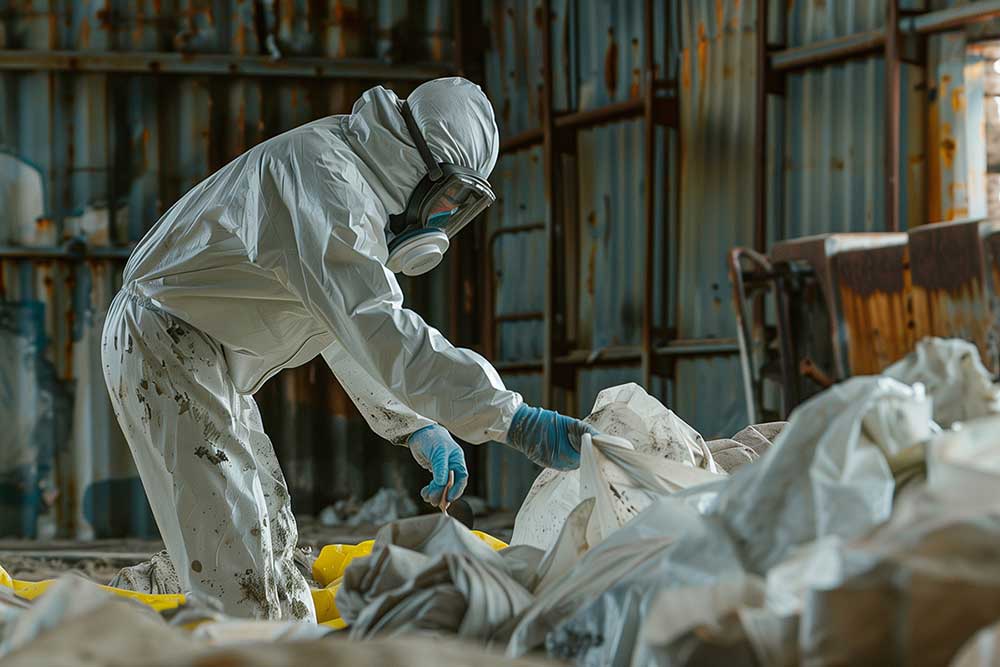
A qualified provider approaches removal through controlled work-area management: containing the affected space, preventing fiber migration to adjacent areas, and ensuring that workers outside the removal zone are not inadvertently exposed. This is not just a safety protocol — it is a coordination mechanism. How well those boundaries are established and maintained directly affects whether follow-on trades can enter adjacent areas safely.
Documentation is central to what makes removal “proper” in operational terms. Air clearance records, site condition reports, and completion documentation provide the evidence that the work was completed according to required standards. Without that documentation, there is no verified basis for declaring an area ready for construction work to proceed.
Communication quality is equally important. A provider that communicates scope changes, unexpected findings, and clearance status clearly and promptly allows property managers to make informed decisions in real time. A provider that does not creates uncertainty at exactly the moments when decisions need to be made.
3. How Proper Removal Protects Construction Workers
Construction workers — electricians, plumbers, drywall installers, painters, and others who follow asbestos removal work — depend on a site being genuinely ready before they begin. Proper removal supports that readiness in three specific ways.
First, it eliminates or reduces active exposure pathways. When removal is performed by qualified professionals under controlled conditions, the work area is contained, disturbed materials are encapsulated and removed, and residual fiber levels are verified before the space is reopened. Workers who enter afterward are not walking into a hazard that simply looks resolved.
Second, it establishes clear access controls. Proper removal includes defined procedures for who can enter affected areas, when, and under what conditions. This sequencing protects workers who would otherwise have no way to know whether adjacent spaces are safe. Without those controls, a contractor performing unrelated work nearby may be exposed without any awareness of the risk.
Third, proper removal creates verified handoffs. When a removal provider issues clearance documentation, it gives the property manager and the follow-on contractor a shared basis for site readiness. That documentation — supported by air quality testing and inspection — is not just a formality. It is the mechanism by which responsibility for site conditions is transferred in a traceable, defensible way.
Where these elements are absent or incomplete, worker protection breaks down — not because of a single failure, but because the coordination structure that keeps workers safe was never properly established.
4. What Property Managers Should Evaluate at the Awareness Stage
You do not need to be a technical expert to ask the right questions before engaging an asbestos removal provider. At this stage, the goal is to assess whether a provider has the qualifications, communication discipline, and coordination readiness to support your project and protect the workers who follow.
Consider asking providers about:
- Licensing and qualification: Is the provider appropriately licensed for the type and scale of work involved? Can they provide documentation of qualifications before work begins?
- Scope clarity: How do they define the work area, manage boundaries, and handle unexpected findings that expand the scope mid-project?
- Worker-protection protocols: How do they control access to adjacent areas and communicate conditions to follow-on contractors?
- Documentation and clearance: What does their post-removal documentation include, and how is clearance communicated to the project team?
- Coordination readiness: How do they communicate with property managers and contractors throughout the project, not just at completion?
For Los Angeles properties, local project environments often involve multi-trade coordination across occupied or partially occupied buildings. Asking these questions early — before scope is finalized and scheduling is locked — gives you the information needed to evaluate fit before commitments are made.
Next Steps
Proper asbestos removal protects construction workers by eliminating exposure pathways, establishing access controls, and creating verified site-readiness documentation. For property managers, understanding this connection supports better planning decisions, stronger vendor conversations, and fewer preventable complications once work is underway.
Your role is not to manage removal technically. It is to ask the right questions, coordinate effectively across project participants, and ensure that the provider you engage has both the qualifications and the communication discipline to protect everyone who works on your site.
Before moving further into provider evaluation or project planning, consult qualified professionals who can review your specific site conditions, project type, and applicable requirements. This article provides an educational foundation; project-specific guidance requires specialist review.
Frequently Asked Questions
Why is proper asbestos removal a construction-worker issue, not only a building issue?
Asbestos becomes a worker-safety issue when building materials are disturbed. Renovation, demolition, and maintenance activity can release fibers that affect any worker in or near the affected area — not just those performing removal. Proper removal controls exposure at the source, so follow-on trades do not inherit a hazard that was never resolved. The quality of that removal directly determines the safety conditions that construction workers walk into.
What should a property manager understand before speaking with asbestos removal providers?
Before engaging a provider, understand the scope of the planned work, which areas may be affected, and how removal fits into the broader project schedule. Know what documentation you will need at completion and which other contractors need access to adjacent areas. This prepares you to evaluate whether a provider’s qualifications, communication approach, and coordination readiness match the demands of your specific project.
Frequently Unasked Questions
How does project sequencing affect worker protection even before removal work starts?
The order in which different project phases begin matters significantly. If follow-on trades are scheduled to begin before removal is complete and cleared, workers may enter affected areas based on assumed — rather than verified — site readiness. Access controls established during the planning phase, and clearly communicated across all parties, prevent this kind of overlap before it creates an exposure risk.
Why do documentation and handoff communication matter after removal appears complete?
Visual completion is not the same as verified site readiness. Air quality clearance testing, written inspection records, and formal handoff communication provide the evidence that supports safe re-entry. Without these, the construction workers who follow have no basis for confirming that the conditions they are entering have been properly resolved. Documentation turns “we think it’s done” into a defensible, traceable record of site readiness.